
Why Do We “Pray” to the Saints?
Or Rather, Why Do We Ask the Saints to Pray for Us?
Why Turn to the Saints at All?
I’ve lost count of the number of times I’ve told an autorickshaw driver to take a left turn, only to have him reply, “Madam, that is a dead end.” And then, I’ve had to laugh awkwardly and say, “Sorry, I meant, take a right.”
I am directionally challenged. That’s a fact.
And yet, I’ve traveled all across Mumbai, Goa, and plenty of new places, managing to arrive exactly where I needed to.
How does someone who can’t tell right from left do that? Especially in the days before Google Maps?
Well, I had something better than Maps: I had a best friend who was brilliant at finding her way around most places. I simply (and quite lazily) tagged along while she led the way.
After my sweet friend left for Germany, I had another talented navigator — my husband — who could be counted upon to take me wherever I wanted to go. So even with zero sense of direction, I still reached my destination.
Not because I knew the way but because I was walking with people who did.
In many ways, this is what turning to the saints is like.
They have already made the journey that lies ahead of us. Many have walked the same paths we do — as parents, teachers, spouses — facing the quiet and not-so-quiet challenges of everyday life.
They know what it means to try, to fail, and to begin again, relying on the grace that comes from God.
The Saints: Our Navigators
Because they have journeyed along similar roads, their lives serve as reminders that we, too, can live faithfully, right where we are.
Discover Stories of Saints
Some of the saints show us how to love well in the ordinary rhythms of life, how to be better parents, loving spouses, and friends. Others, like Saint Teresa of Avila, teach us how to persevere in prayer when we don’t even know where to begin. Saints like Augustine and Ignatius of Loyola remind us that faith is not always easy, but that God remains close even when we battle doubt or anger.
Many have left behind writings and prayers that continue to guide and inspire us centuries later.
Each saint has walked a different path. Yet, each one gently points us to the Way that leads home.
The Saints: Our Companions in Prayer
The saints aren’t just inspirational figures from the past. As they share in Christ’s life and the joys of heaven, they lift us up in prayer even today.
Asking for their intercession is a lot like asking a friend to pray for us.
And because they now stand in the fullness of God’s presence, they love more deeply and pray more fully than we can. Their prayers, as Scripture tells us, rise “before God from the hand of the angel” (Revelation 8:4, NRSVCE).
Why would we not ask such companions to pray for us, when they have walked before us and have known struggles like our own?
Saint Thérèse of Lisieux, for example, is someone I treasure as a sister in Christ. Her early life mirrors many of my own spiritual battles, and so I naturally turn to her for prayers when I’m caught in my own petty selfishness.
A saint like Thérèse understands those struggles in a deeply personal way — and now stands in the presence of God. So while I never hesitate to go to the Father myself, I also turn to saints like her, trusting that these heavenly companions will join their prayers to mine.
This is the beauty of the Communion of Saints: we do not journey alone.
Patron Saints: Our Friends in Need
One of the most tangible ways in which we experience this communion is through the tradition of patron saints.
Imagine having access to a circle of friends you can always rely on — friends who understand what you’re going through because they’ve faced similar situations. This is what patron saints are like.
From examinations and headaches to baking and parenting, there is probably a patron saint for every need. This is not without reason. Something in these saints’ lives reflects those particular experiences. Over the centuries, many have sought their intercession and encountered God’s hand at work in powerful ways.
Saint Rita of Cascia, for instance, is known as the saint of the impossible. Her intercession has been associated with situations that seem beyond human resolution.
Rita’s life was very different from mine. Yet, when I first read about her, I instantly felt drawn to her quiet strength. And so, recently when I faced two dead-end situations, I asked for her prayers. The Lord answered, and what seemed impossible became possible.
This is often how a spiritual friendship with a saint begins.
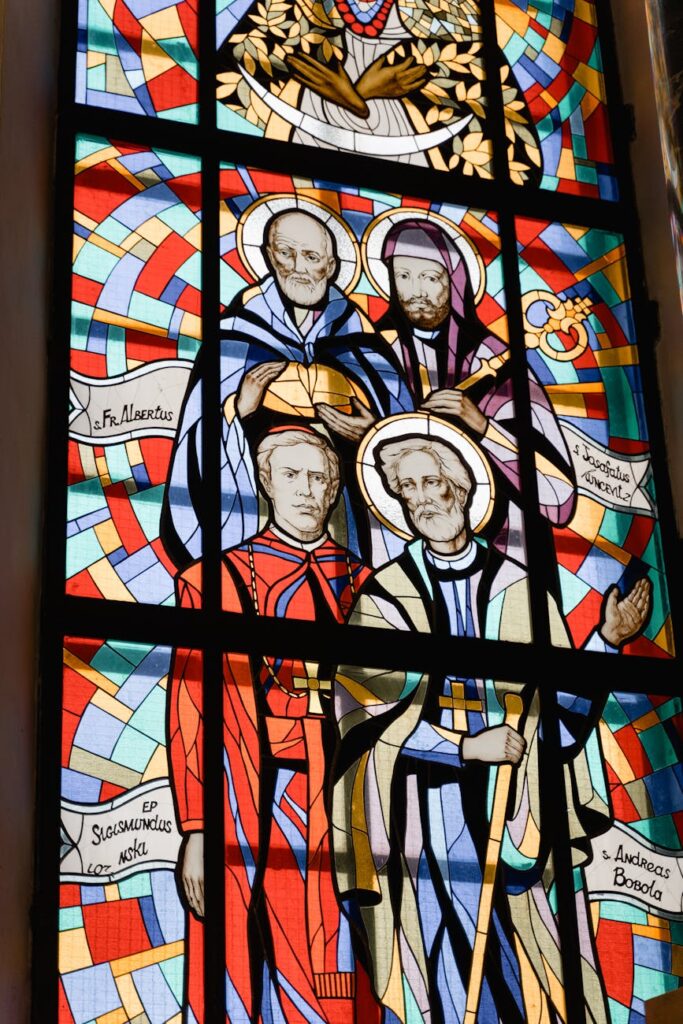
A saint we once only read about slowly becomes a close companion, praying for us and gently leading us on to eternity. The tradition of patron saints, then, is not only about needs and categories but about a relationship that draws us into the life of Christ.
Journeying Together
Ultimately, the saints remind us of something simple yet deeply comforting: we are not meant to journey alone.
As we walk the path of faith, we sometimes stumble. We take wrong turns, find ourselves at dead ends, and sometimes lose our bearings altogether.
But God in His goodness has given us companions for the journey — men and women like us, who now share in His glory. They understand the trials we face this side of heaven, not from a distance but from experience. They remind us that holiness is possible.
Not because life is easy but because God is good.
So when the road feels uncertain and you can’t tell left from right, look to the saints. Ask them to pray for you.
They have walked this road before. They know the Way.
And they will gently guide you home.
In faith,


ABOUT THE AUTHOR
Velany is a Catholic wife and mother, a catechist, and a writer who delights in seeing God at work in the ordinary rhythms of life. An editor by profession, she holds degrees in English from St. Xavier’s College, Mumbai, and the University of Mumbai.
Read the backstory to learn why she started Smallest of Seeds.